Newsletter Subscribe
Enter your email address below and subscribe to our newsletter
Enter your email address below and subscribe to our newsletter

 ByJohn A
Wedding season and festival calendars choose from the same wardrobe, yet they rarely need the same jewelry. A kundan jewelry set chosen for a bridal lehenga can overwhelm a light festive saree, and the reverse leaves an outfit looking underdressed. Occasion, neckline, and fabric weight all shape what actually works. The mismatch rarely shows until photographs come back.
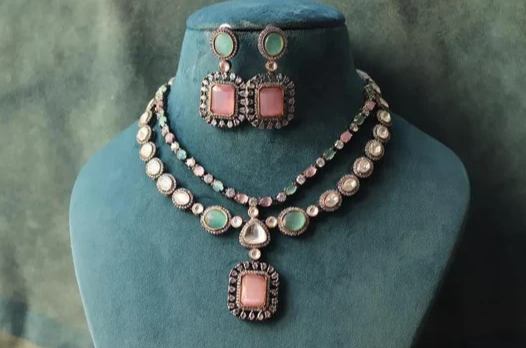
Matching jewelry to the event rather than to the outfit alone solves most of this. A kundan jewelry set works hardest when its scale, length, and coverage answer the formality of the occasion, giving the wearer one clear focal point instead of several competing ones. That single decision quietly settles necklace choice, earring size, and everything layered around them.
Jewelry Chosen Last, Outfit Chosen First: Most mismatches start with sequencing, since the outfit gets weeks of attention and the jewelry gets a rushed decision days before the event. A heavily embroidered lehenga already carries dense surface work at the neckline, so a wide layered necklace lands on top of it and both pieces lose definition. The saree faces the opposite risk.
Delayed Decisions Narrow the Options That Remain: Waiting until the final week limits choice to whatever is available rather than what suits the occasion, and sizing or length adjustments stop being possible. Stylists working through wedding season routinely see clients settle for a necklace that sits at the wrong point on the chest, which flattens the visual hierarchy the outfit was built around.
See also: Glass Lantern Rooflight: Design, Light and Practical Considerations
Scale Decides Where the Eye Lands First: A kundan jewelry set sized to the occasion gives a look at one anchor point, and everything else supports it. A bridal ensemble can carry a substantial neckpiece because the outfit, veil, and setting are all built for that weight. Festive dressing works on a lighter register, where a single defined piece reads clearly against simpler fabric.
Comfort Holds up across a Long Event: Weight distribution matters as much as design once an event runs past a few hours. Heavier layered pieces pull at the nape and shift during movement, which becomes noticeable through dinner service and long photograph sessions. Lighter constructions with balanced clasps let the wearer move naturally, and comfort at hour six often decides what gets worn again.
Long Sets Suit Open Necklines and Formal Weight: A long layered set works when the neckline is open and the outfit carries formal weight, which is why it belongs with bridal lehengas and heavy reception drapes. The trade-off is coverage, since a long set sitting over dense chest embroidery hides the very work the outfit was chosen for.
Statement Chokers Answer High Necklines and Close Framing: A choker sits above the neckline and holds attention near the face, making it the practical choice for high-necked blouses and sarees with detailed borders, especially at events where guests see the wearer at close range. The trade-off is dominance, because a bold choker leaves little room for large earrings or a Maang tikka.
Restrained Pairings Carry Smaller Gatherings Well: A pared-back kundan jewelry set with modest earrings and a slim neckpiece fits mehndi afternoons and family dinners where the dress code sits comfortably below full formal. The trade-off is presence, since restrained pieces can read as underdressed at a reception, so the same combination rarely covers both ends of a wedding week.
One Set Worn Often Beats One Worn Once: Choosing around the occasion tends to produce pieces that reappear, and that repetition is where cost per wear actually improves. A mid-scale necklace with detachable layers moves from a sangeet to a Diwali dinner without looking out of place, while a single-purpose bridal piece often stays in its box after one night.
Repeat Wear Depends on Versatility, Not Size: The pieces that get reworn are rarely the largest ones. Sets built with adjustable lengths and separable components adapt to a saree one weekend and a lehenga the next, which keeps a wardrobe working across a season. Buying strictly for the biggest event usually leaves the smaller celebrations unserved, and those make up most of the calendar.
Match the Set to the Event before the Outfit: A few practical checks make the difference between a kundan jewelry set that fits the occasion and one that fights it. Running through them before purchase saves rushed substitutions later, and each point connects directly to how the pieces will look and feel on the day itself. The list applies equally to bridal and festive dressing.
Choosing by occasion rather than by impulse gives every celebration a look that holds together, from the heaviest bridal moment to a quiet festive lunch. Postponing the decision only narrows what remains available once the dates arrive. Browse the collection by occasion and get in touch for help selecting the set that suits your event.