Newsletter Subscribe
Enter your email address below and subscribe to our newsletter
Enter your email address below and subscribe to our newsletter

 ByJohn A
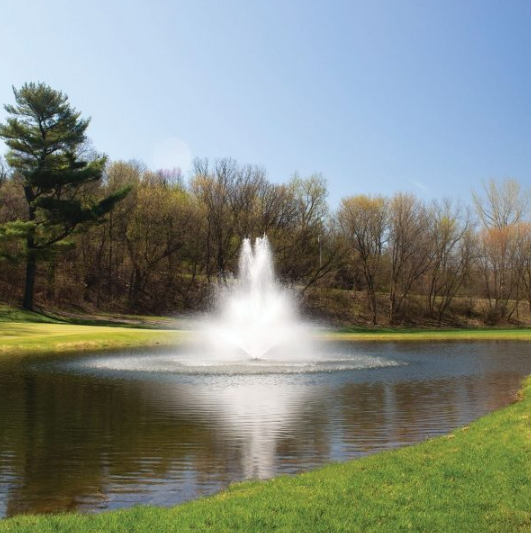
Most pond owners judge a fountain by the height of its plume and little else. Placement rarely enters the conversation until the display looks lopsided or one corner of the water turns green. Pond fountains floating in a poorly chosen spot still run fine, yet the water around them tells a different story.
The right position or placement corrects that anomaly. Pond fountains floating in a well-chosen spot deliver a fuller, better-balanced display while pushing oxygen-rich water toward the areas that need movement most. The same unit, moved fifty feet, can change how the surface looks from the patio and how evenly the whole basin circulates through summer.
Still Water at the Far Bank: A fountain placed near the outflow or tucked into a corner moves the water around it and leaves the rest in a still condition. Circulation weakens with distance, so the far end of the pond holds warm, oxygen-poor water all season. The display looks fine from twenty feet away while half the basin stagnates.
Muck That Deepens Each Season: Pond managers who inspect neglected water features routinely find the same pattern of sediment banked along one shore, thin plant growth, and murky shallows in the littoral zone where light should support healthy vegetation. Left alone, that muck deepens each year, and moving the fountain later corrects less than moving it now.
See also: Home Design Services in Northern Ontario for People Who Don’t Want a Cookie-Cutter House
The Center Is Not Always Best: Center placement gives a symmetrical plume from every bank, which suits round or oval ponds viewed from several sides. Irregular ponds tell a different story. Setting the unit slightly off center, closer to the main viewing angle, produces a taller-looking display and pulls water out of the sluggish arm.
Depth Beneath the Float: Water depth under the intake controls how much the unit can lift and how far the circulation pattern spreads. Shallow water pulls in silt and starves the intake. Around three feet of clearance beneath pond fountains floating on open water keeps the draw clean and the spray steady through the day.
Two Anchor Lines Beat One: A single anchor lets the unit swing with the wind, drifting toward the bank and dragging the power cord across the bottom. Two or three lines set at wide angles hold the position and keep the plume upright. Slack matters too, since taut lines pull the float low on windy afternoons.
Distance from the Bank: Keep the unit well clear of the shoreline, ideally with the spray radius plus several feet of margin between the plume and dry land. Close placement erodes the bank, soaks walkways, and lets weeds tangle the intake screen. Open water on all sides also makes seasonal cleaning less awkward.
Prevailing Wind Moves the Plume: Wind pushes fine droplets downwind long before it moves the float itself. On a long, narrow pond, the wind fetch distance across open water builds enough force to tilt the entire display. Set the unit upwind of center so the drifting spray lands back on the water rather than the lawn.
Odd Shapes Need Off-Center Placement: Kidney-shaped and L-shaped ponds rarely circulate well from a central point, because the current dies before it turns the corner. Placing the unit in the larger lobe and angling the flow toward the narrow arm carries movement through the whole basin. Pond fountains floating in that spot serve both halves at once.
What the Box Does Not Say: Horsepower ratings describe the motor, not the water. Discount units advertised at one horsepower often deliver output closer to a third of that once the pump is measured honestly. Net flow rate, the volume actually lifted and returned each minute, is the figure that predicts aeration and spray quality.
Placement Multiplies Available Flow: A strong unit in a poor spot still leaves dead water behind it, while a modest unit in the right spot can turn over the full volume of a small pond. Buying more power to compensate for placement costs more to run every month and rarely fixes the circulation problem underneath.
A Site Check Worth Ten Minutes: A short site check before installation saves a wet afternoon of repositioning later. Walk the bank, note where the water sits still, and watch which way the wind runs late in the day. Pond fountains floating in a spot chosen this way rarely need moving once the lines are set.
Position is the one upgrade that costs nothing and improves everything the fountain already does. Better circulation, cleaner shallows, a fuller plume, and less spray on the grass all come from the same decision. Waiting a season means another year of sediment settling in the corners that never see movement.
Pond shape, depth, and wind pull in different directions, and the right compromise depends on the water in front of you. A short conversation with a specialist who can review your pond dimensions and flow needs will point to the correct position and unit. Reach out for a placement assessment before your next install.